From prediction
to production.
Mytheus orchestrates specialized AI agents that research, simulate, engineer, review and securely deliver solutions for complex scientific, industrial and aerospace challenges.
Watch the brand film01:00Deep-tech execution is still trapped in expert bottlenecks.
The problem is not a shortage of intelligence. It is the distance between disciplines, disconnected tools, and decisions that lose their evidence along the way.
Question
Unclear scopeResearch
Siloed sourcesSimulation
Disconnected modelsPrototype
Costly iterationValidation
Fragmented reviewHandoff
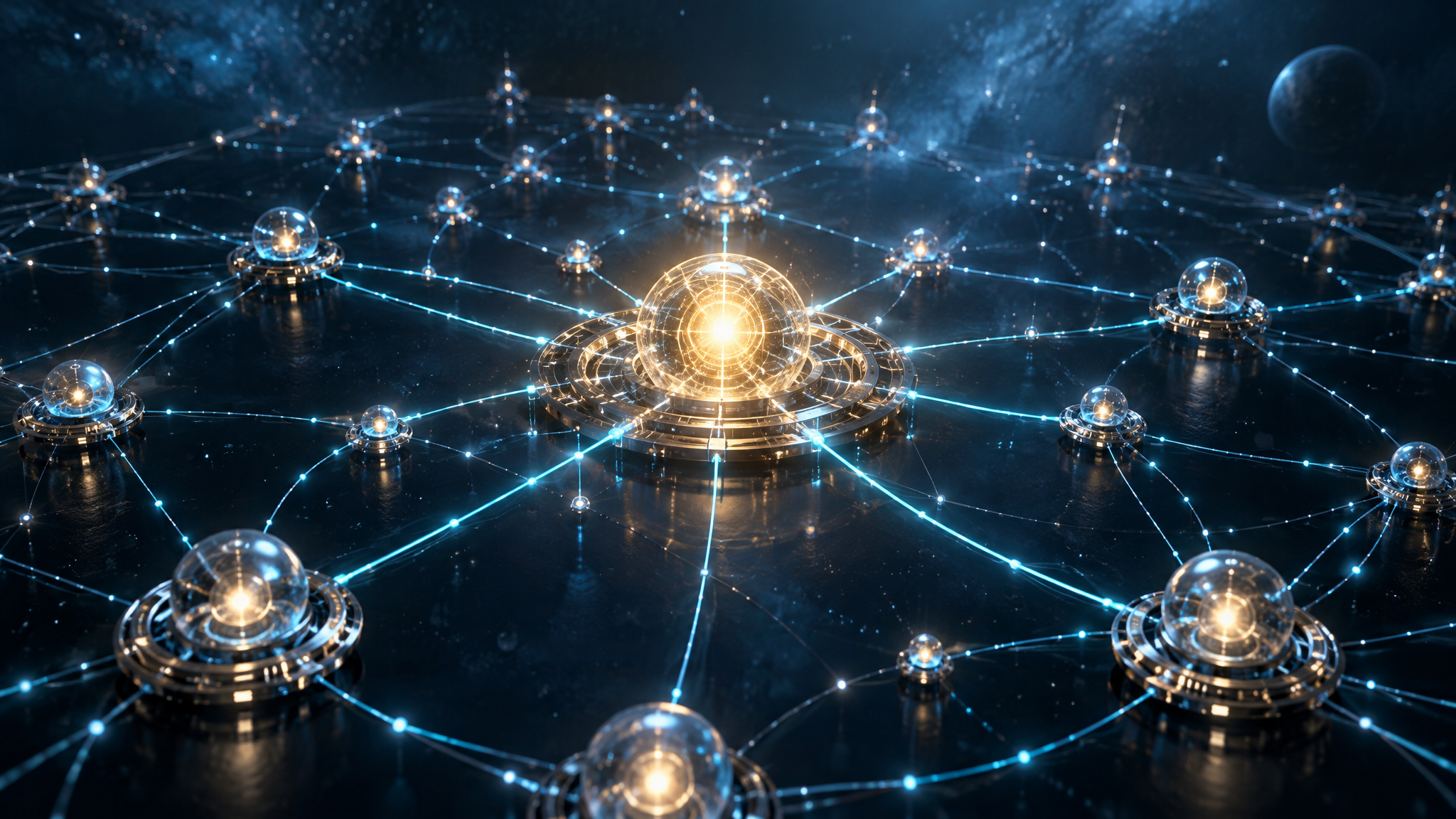
Lost contextOne intelligence layer. Thousands of specialized capabilities.
A platform vision for connecting deep expertise to tangible work. Every stage keeps the evidence, the constraints, and the human decision owner in view.
Intake
Define the challenge, desired deliverable, data boundaries, and human decision owners.
Evidence retained at every handoffNot another answer.
A path to something real.
Intelligence for the systems, materials, and missions that shape the physical world.
Explore aerospaceComplex missions. Clear control.
Explore a simulated mission workspace. Inspect specialist agents, supporting evidence, dependencies, and the human approval gate.
Reduce turbine inspection
cycle time by 40%.
Illustrative mission objective — not an achieved result.
Interactive demonstration · illustrative data · no live systems connected
Specialized intelligence, created when the mission demands it.
Hypersonic thermal
protection analysis.
New expertise must inherit the mission’s boundaries—not invent its own.
Conceptual agent configuration — no live agents are created.
Generate a bounded agent specification.
Compounding intelligence. Without runaway autonomy.
Improvements are proposed, sandboxed, benchmarked, approved, versioned, and reversible.
No uncontrolled
self-modification.
Observe reviewed mission outcomes, not unrestricted customer data.
Intelligence meets the physical world.
Before a machine moves,
the evidence should.
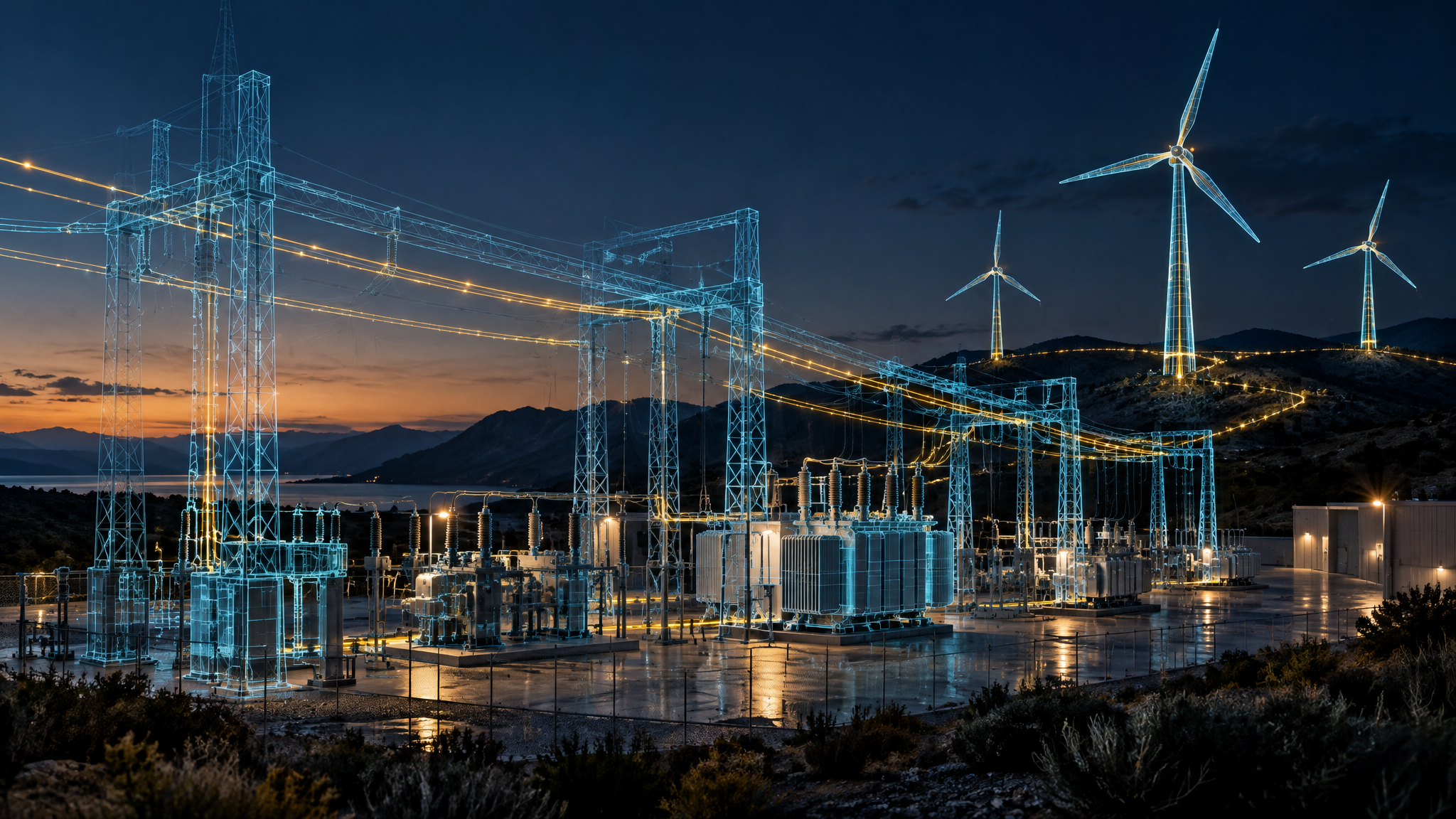
Connect CAD, sensor data, work instructions, and historical defects to root-cause analysis, materials reasoning, simulation, and independent peer review.
Watch the Physical AI scenarioConceptual workflow. No live machine control.
Test the possibilities. Before the consequences.
Adjust synthetic system inputs and explore how a transparent toy model responds. All demonstrations are clearly separated from engineering advice.
Demonstration scenario — not operational or engineering advice.
Continue comparative evaluation.
Compare aerospace engine assumptions against measured data before treating the model as representative.
Toy stress index: 40. Formula: mean of four input indices + fault offset (25) + stress-test offset (15) + timeline/10. All inputs are dimensionless. This is not a physical prediction.A mission is more than an orbit.
Orbital concept visualization — not a flight simulation.
Design a constellation for infrastructure monitoring.
Mission concepts, satellite architecture, communications, autonomous-operations playbooks, ground segments, orbital infrastructure, regulatory research, and Space-to-Earth business models—considered together.
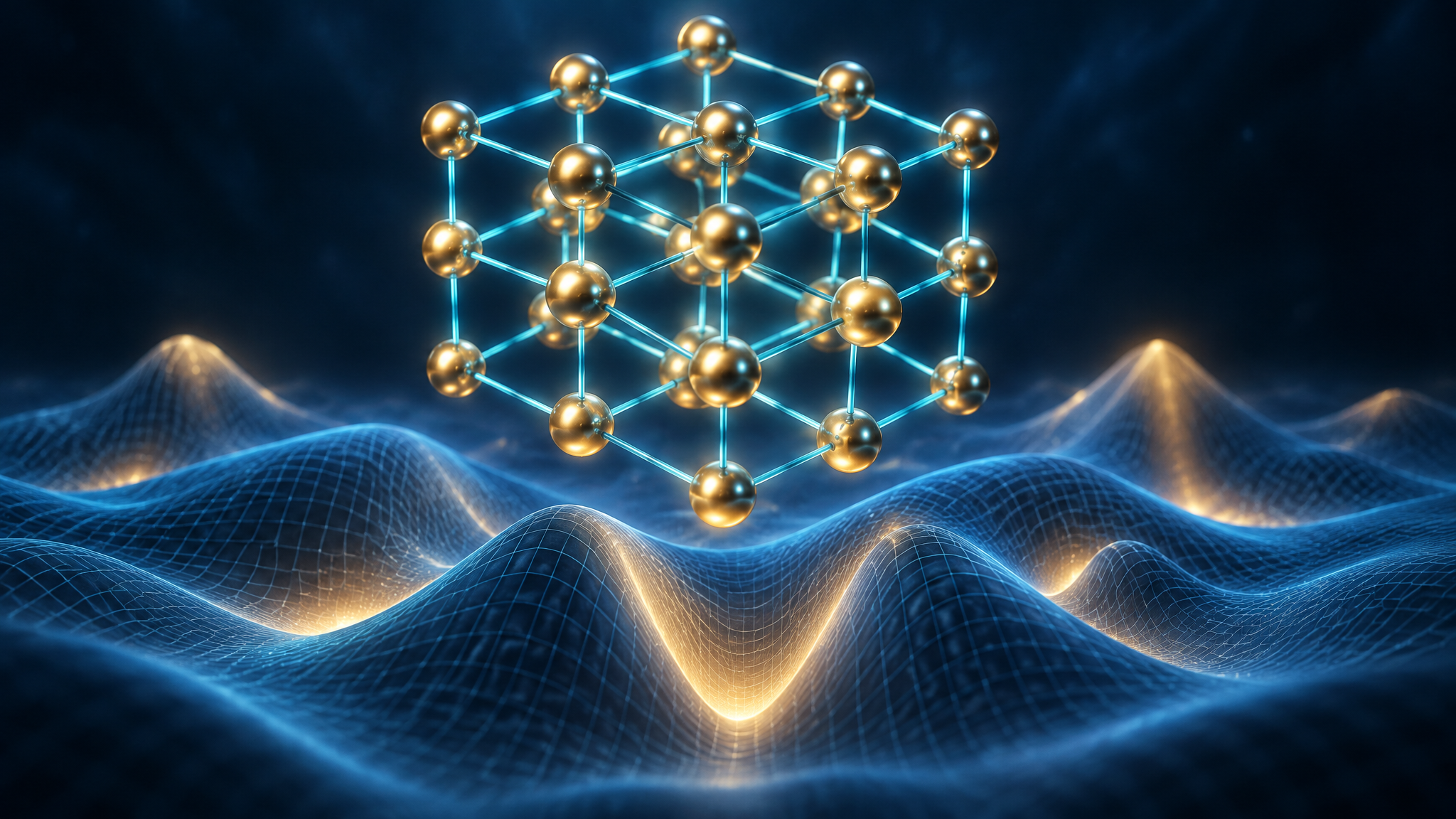
Hybrid intelligence for high-dimensional problems.
Classical agents, optimization engines, quantum simulators, and domain models—coordinated without assuming quantum advantage.
Define variables → Generate candidates → Hybrid optimization → Rank → Simulate → Validate → Explain
Synthetic candidate scores. No quantum hardware or physical model is executing.
Explore materials, industrial scheduling, manufacturing, logistics, mission planning, and multivariable design. Balanced ranking is the mean of three synthetic scores; other objectives use one score. No quantum advantage is claimed.
Better questions. Challenged conclusions.
What material architecture offers the best thermal-performance-to-weight tradeoff?
Research scenario · illustrative summaries, not sourced scientific findings.
Materials Scientist Agent
Compare a layered ceramic concept with a metallic baseline; material qualification is unresolved.
- Evidence / citations
- Example source slots: material datasheet, thermal test record, process specification. No external citations are asserted in this demonstration.
- Assumptions
- Comparable geometry; defined thermal conditions; no experimental measurements supplied.
- Confidence
- Uncalibrated — insufficient evidence for a design decision.
- Decision rationale
- Retain candidate alternatives until test evidence resolves the principal tradeoffs.
Every recommendation has evidence.
Follow the path from a source to a decision. Inspect provenance, assumptions, review state, and the artifact they support.
Design decision
The proposed design decision depends on an agent conclusion, simulation, and source dataset.
Illustrative provenance graph. No invented research citations.
From research to working deliverables.
Bring source material, questions, and uncertainty into a coherent brief.
Built for the physical economy.
Aerospace
Coordinate engineering research, simulation studies, and independent review in a single evidence-led mission.
Explore the industryPossibility, made tangible.
Explore scenario demonstrations—not invented customer stories or promised results.
Every mission strengthens the platform.
The design goal: reviewed evidence becomes reusable expertise. Improvements earn their place through evaluation—not unchecked self-modification.
What should
Mytheus solve?
Complex missions. Specialized intelligence. Human control.